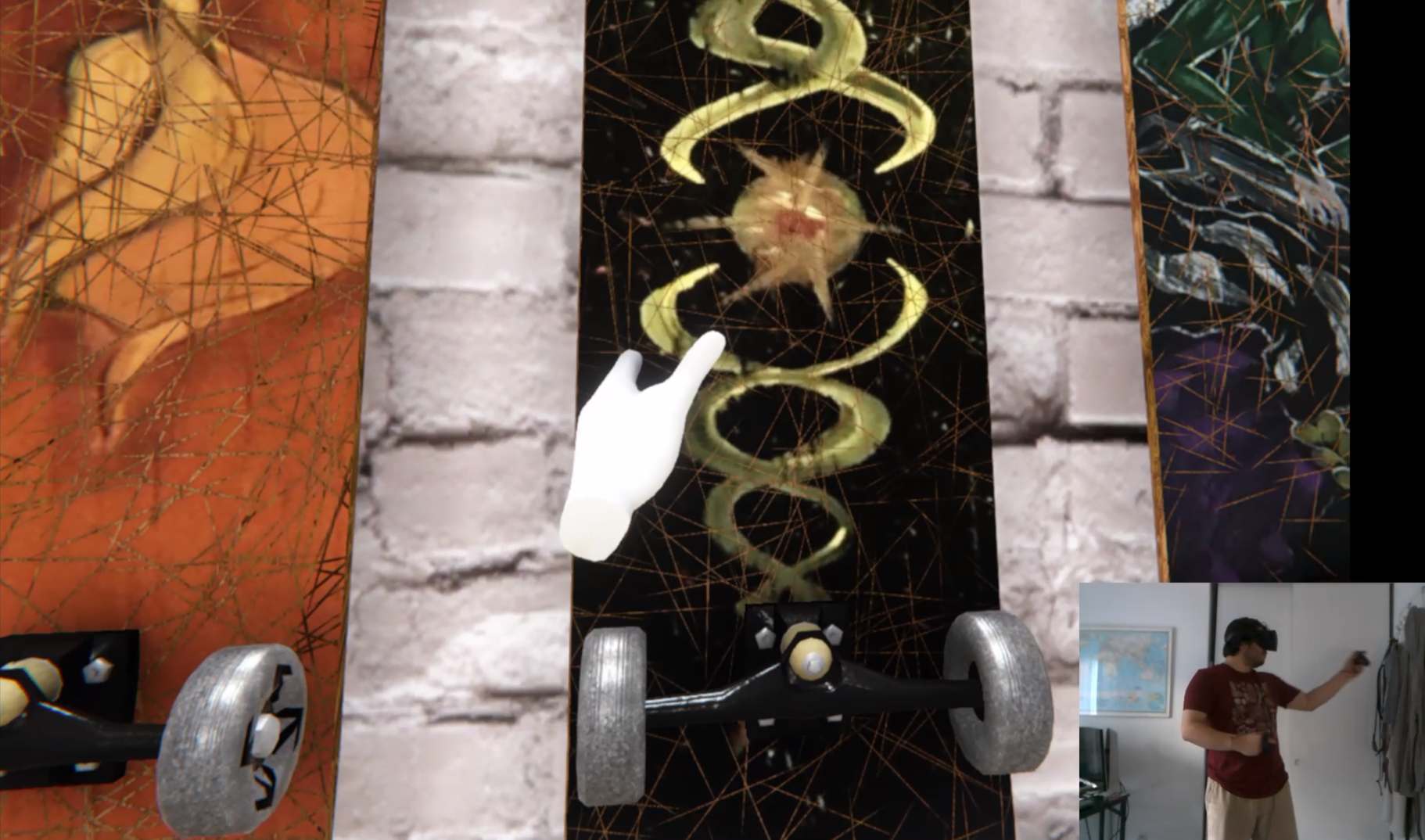
The "RUE" Skateboard collection featured four stylistic and fantastical designs
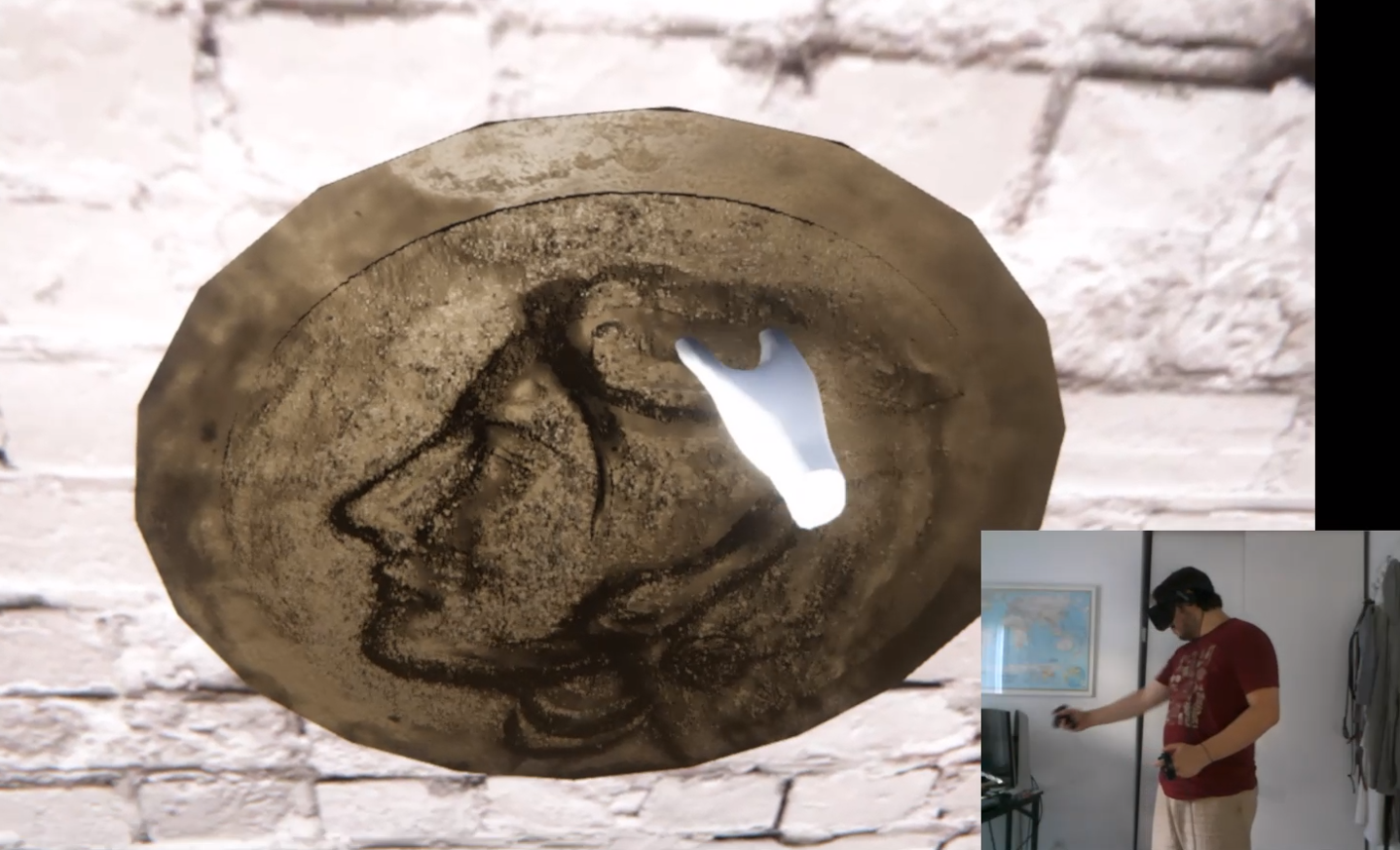
Medallions of the Serpent featured two portraits as cast iron coins
Dusting off one of my earliest Unity Projects: a VR art gallery I built in 2017 for the Oculus Rift.
On Display is a VR museum experience built for the Oculus Rift. The player walks the halls of a curated gallery space featuring 25 works from a collaborating mixed-media artist — paintings, drawings, sculptures, skateboards, video installations, and handbuilt physical objects. Each piece was translated from real-world art into a digital exhibit, with interactive pieces the player can pick up and inspect using VR controllers.
Translating physical artwork into a VR space isn't a scanning job. Each piece had different material properties — painted wood, glossy ceramic, matte canvas, reflective surfaces, video playback — and needed to read correctly under VR lighting without looking flat or fake. The handbuilt physical objects needed to be modeled in Blender from reference and brought into Unity with materials that matched the originals. The gallery itself needed to feel like a real space worth walking through, not a skybox with floating frames.
Built a museum layout with distinct halls and showcase areas, each designed around the type of work being displayed. Paintings and drawings are wall-mounted with appropriate lighting. Physical objects like skateboards and a key sit on display cases and can be grabbed and inspected using Oculus Touch controllers. Video installations play in-world on dedicated screens.
Material and shader work was critical — each piece needed a material setup in Unity that matched the real-world surface: matte for canvas, gloss for ceramics, reflective for display cases, emissive for video screens. Custom models were built in Blender from the artist's physical originals and imported into Unity with proper UV mapping and material assignment.
Player locomotion uses room-scale VR movement with controller-based navigation for traversing the full gallery space.
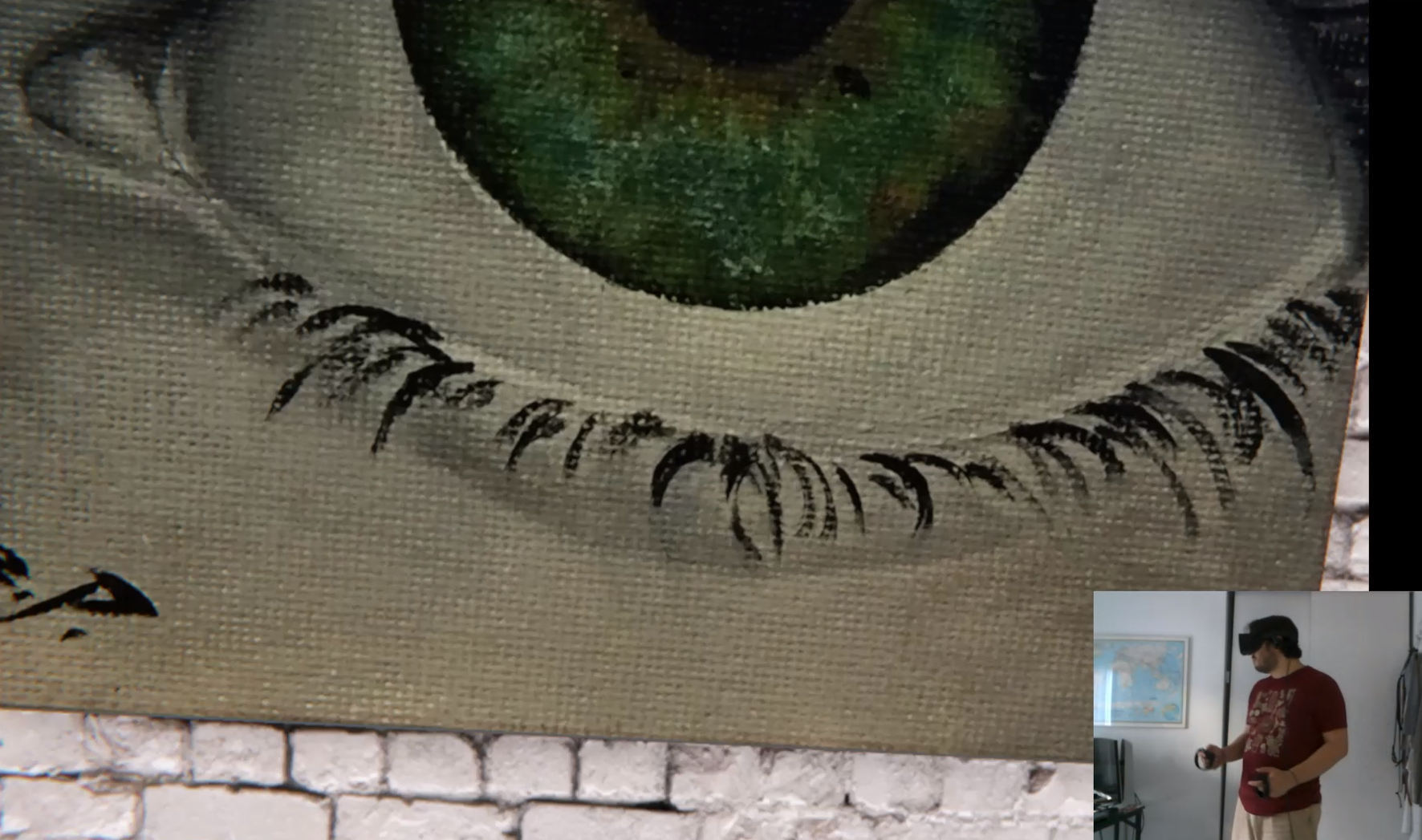
What worked, and what I'd do differently.