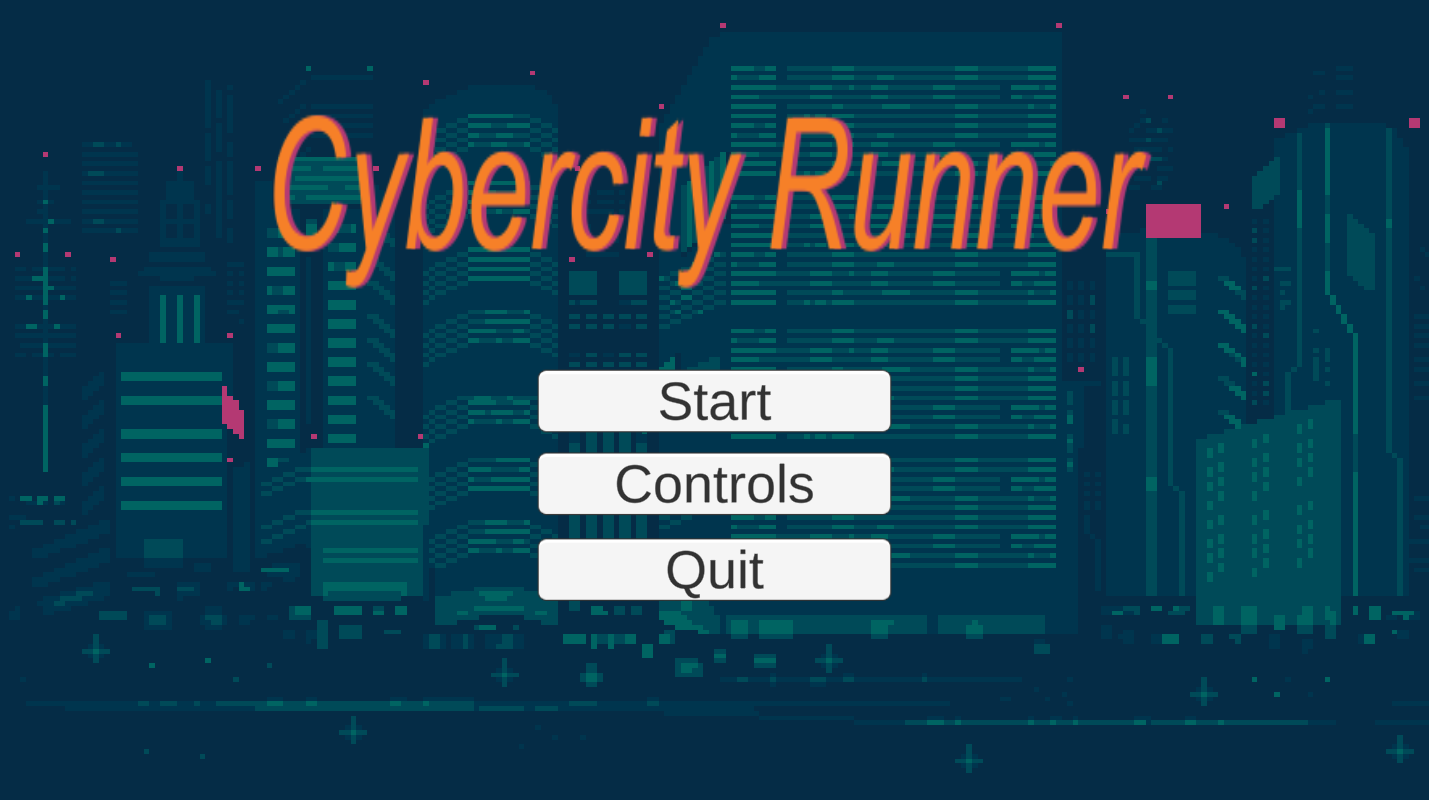
The project that rekindled everything — relearning the basics, fighting off an alien invasion, and shipping something that actually ran at 60 FPS.
Cybercity Runner is the first game I officially shipped where you play as an astronaut fighting off an alien invasion while avoiding spikes hurled at you in the streets of Cybercity. The object with Cybercity Runner was to see if I could pick up where I left off with regards to sharpening my tools for game development. I wanted to work on NPC instantiation as well as obstacle and platform generation. A score-attack infinite runner built to prove I could still ship something.
The challenge with Cybercity Runner is that I had taken a significant pause when it came to developing from scratch again. I wasn’t sure of my scope, or the image of what a finished game might look like to me. I was struggling to remember the basics of Object oriented programming as well as creating simple functions that helped move the characters or instantiate Enemies and obstacles at alternating times. A city of the future under threat of alien invasion isn’t that dangerous if all the aliens spawn right on top of each other and don’t advance across your screen. All hope could be abandoned because shooting the aliens didn’t evaporate them since their colliders weren’t detecting collision!
At first collision would happen to fast and the ray gun would just shoot itself. Then, when the player wasn't shooting itself, collision wouldn't detect an enemy, but enemies could sure detect the player.
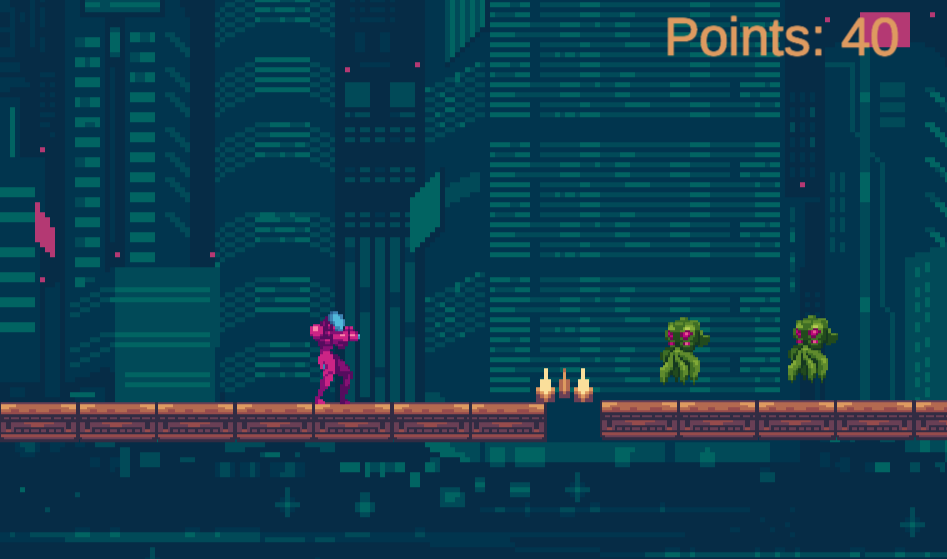
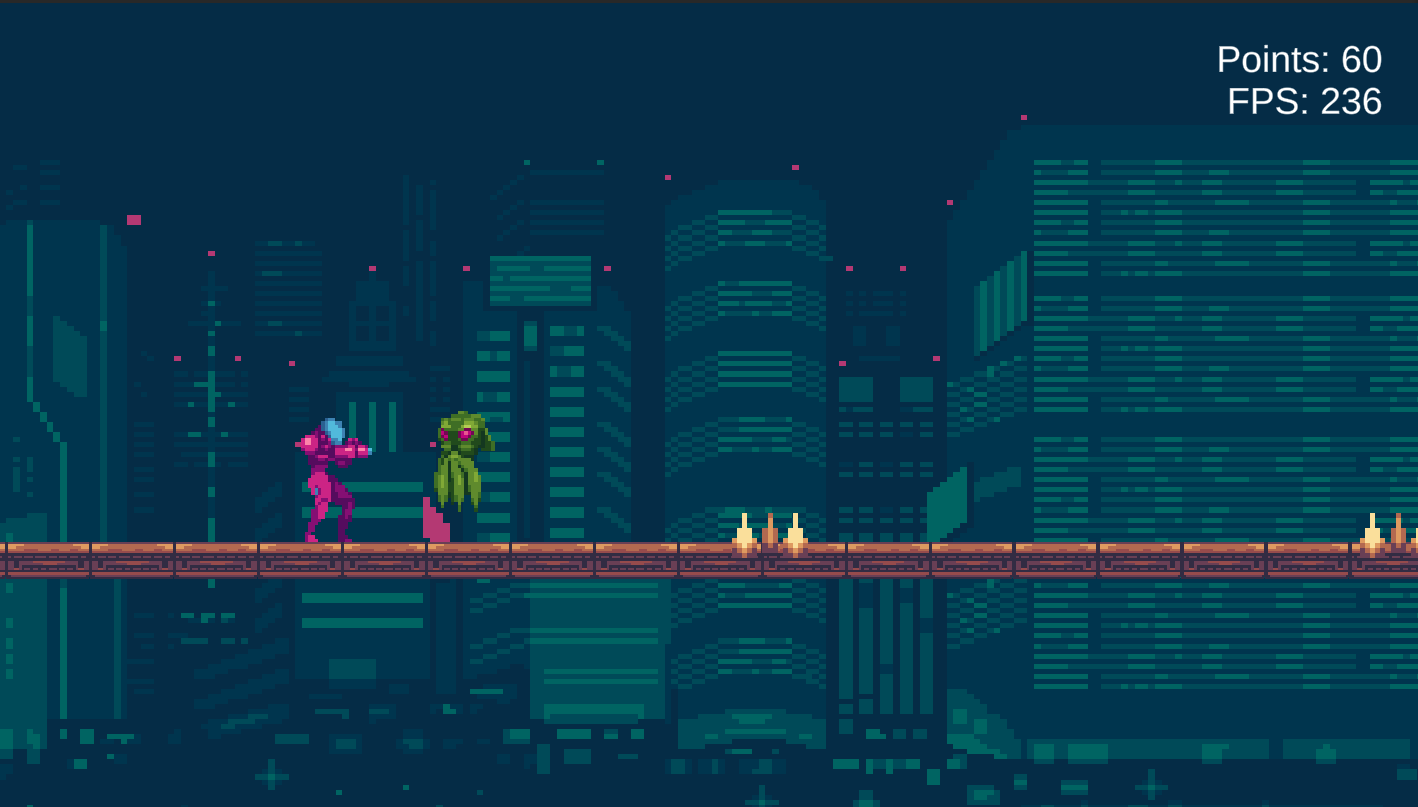
The solution was unglamorous but honest: READING! API documentation, Unity forums, old projects. Relearning how to flip a sprite based on input direction, how to check player movement each frame, how to space enemy spawns so aliens advanced instead of stacking. Most of it was just about 12 lines of code if you don’t account for readability or documenting what I was trying to do.
Each NPC's update functions drove their state through a clean set of booleans:
void Update(){
	//
	float horizontalInput = Input.GetAxis("Horizontal");
	//This is how we move left and right
	body.linearVelocity = new Vector2(horizontalInput * speed, body.linearVelocity.y);
	//This will flip the sprite based on the input direction we get
	if (horizontalInput > 0.01f)
		transform.localScale = Vector3.one;
	if (horizontalInput < -0.01f)
		transform.localScale = new Vector3(-1, 1, 1);
	//Allows Jumping
	if (Input.GetKey(KeyCode.Space) && grounded)
		Jump();
	if (Input.GetKey(KeyCode.Tab))
	{
		GameOverScreen.PauseScreen();
	}
	//Set animator parameter
	anim.SetBool("run", horizontalInput != 0);
	anim.SetBool("grounded", grounded);
	//Debug.Log(grounded);
}
So as frustrating as it was to see the aliens invulnerable to my ray gun but crashing with the player and swallowing him whole, once collision detection clicked, vengeance was mine. I had understood how Unity's collider system expected to be set up — a small configuration issue that had made the ray gun feel completely broken was serving me the revenge I wanted. The 60 FPS target came last, through learning how to manage object pooling and script efficiency so the game wasn't creating and destroying objects constantly. Recycling the same shot, the same alien, the same obstacle constantly meant the game could run smoother without having to always forget and remember new references. The great thing about object pooling is that it can even be applied to tactics a junior developer like myself is learning, as in reusing similar references to customers when you need a chair to reset in a drinking at a bar simulator called Tapped Out! When you keep the reference to an idea, you can use it again without having to rebuild an entire system again to solve similar problems.
What worked, and what I'd do differently.